Skin Protection the wall you rely on
How a healthy barrier defends against environmental damage, and what to do when it slips.
 The skin barrier
There's a moment almost everyone has had. You wake up, look in the mirror, and your skin just looks… off. Tight in places it shouldn't be. A little red along the cheeks. Maybe it stings when you put on your usual moisturiser, the one you've used for years without a second thought.
Most people reach for a new serum at this point. Something with a nice bottle and a promising label. But often, the real story isn't about what your skin is missing. It's about what's gotten through that shouldn't have.
That's the skin barrier at work, or rather, not working the way it should. And it's a subject we spend a lot of time thinking about at Monoskin, because so much of what goes wrong in skin starts right here.
The wall you don't think about until it cracks
Your skin's outermost layer, the stratum corneum, works a bit like a brick wall. Skin cells are the bricks. Lipids ceramides, cholesterol, fatty acids, are the mortar holding everything together. When that wall is intact, it does two jobs at once: it keeps water in, and it keeps everything else out.
A healthy barrier fields all of this quietly, in the background, without you ever noticing it's happening. You only notice when it stops.
What it keeps out
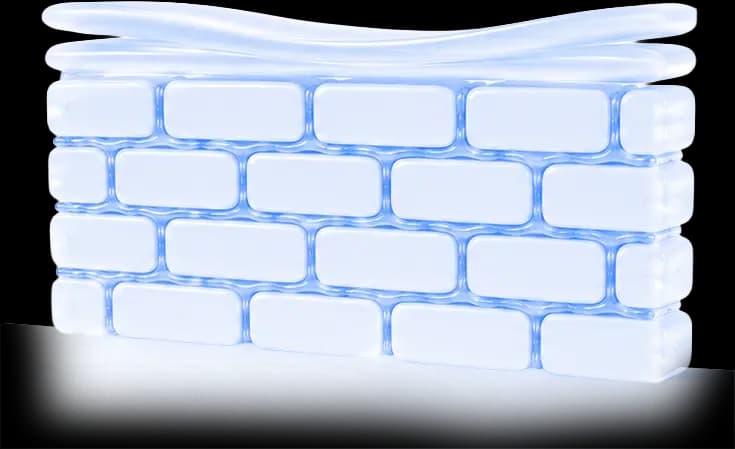
What “barrier damage” actually looks like
It rarely announces itself as a single dramatic event. More often it's cumulative, years of sun exposure, a run of stress, a cleanser that was a little too aggressive, city air that never quite lets your skin rest. The signs tend to show up gradually:
Tightness
Skin feels tight after washing, even with moisturiser applied.
New redness
A flushed look along the cheeks that wasn't there before.
Sudden sensitivity
Reacting to products you've used for months without issue.
Rough or flaky patches
Dry, textured spots that seem to appear overnight.
Dull, tired look
A flat quality no amount of concealer quite fixes.
Underneath all of this, the same thing is happening: gaps have opened up in that brick-and-mortar structure. Water escapes faster than it should, clinically known as transepidermal water loss , and irritants get in more easily. The skin ends up doing double duty, trying to hold onto hydration and fight off invaders at the same time, and it shows.
More than a cosmetic inconvenience
A compromised barrier changes how skin behaves at a fundamental level. Inflammation rises. Pigmentation becomes harder to manage. Fine lines look more pronounced on dehydrated skin. And any actives you use, retinoids, acids, anything with real clinical intent, become far more likely to irritate than improve, because there's no longer a stable base for them to work from.
A weakened barrier needs less interference, not more.

The gap we built 4ZERØ1™ to close
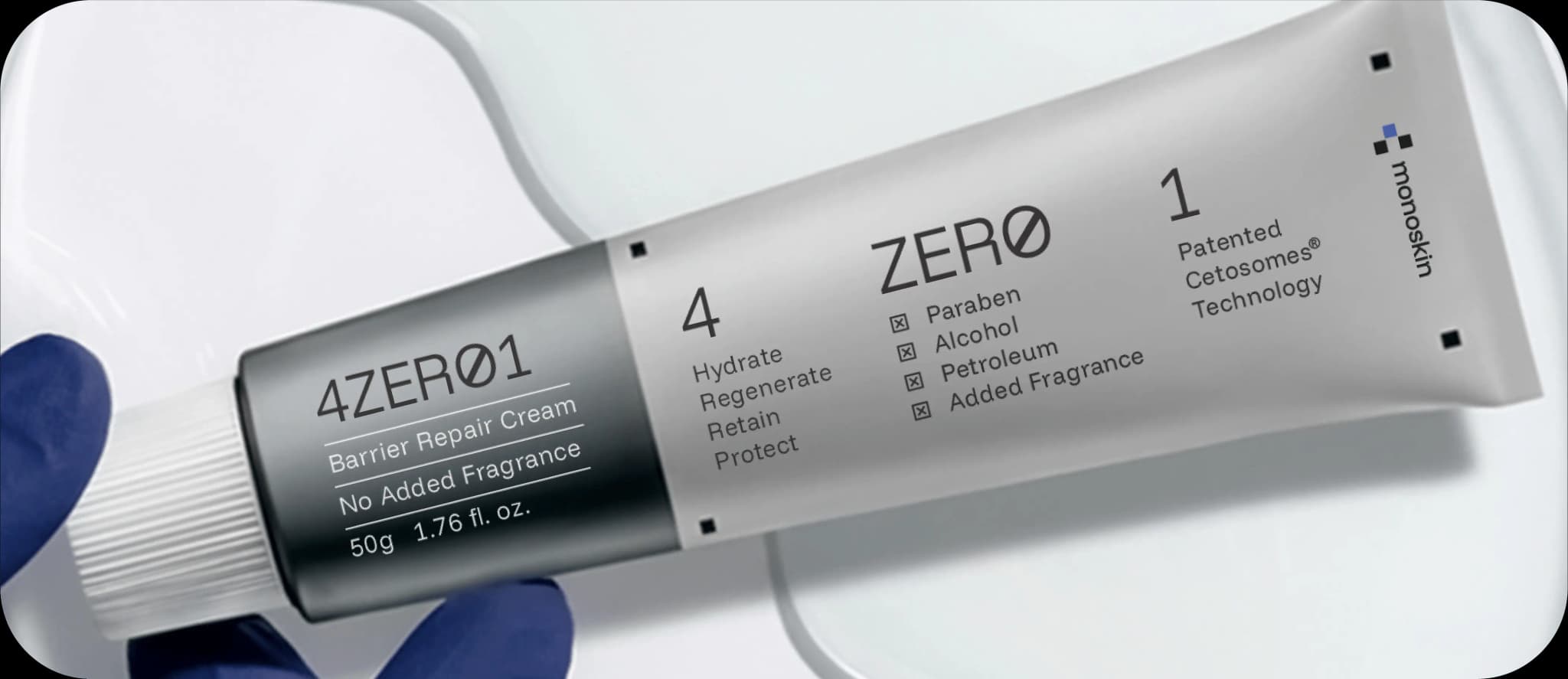
Comfort in the moment doesn't necessarily mean repair is happening underneath. Many products can temporarily reduce dryness, tightness, or irritation, but that immediate relief doesn't always reflect true barrier recovery. We designed 4ZERØ1™ Barrier Repair Cream around a simple idea: restoring a compromised skin barrier isn't one job—it's four essential processes working together to help rebuild resilience, support recovery, strengthen the barrier, and maintain long-term skin health.
Restore lost lipids
Delivers Pro Barrier CLR™, Aquaxyl™, and shea butter to support the barrier's lipid structure, the same “mortar” that holds skin cells together.
Calm existing irritation
Settles the inflammation a compromised barrier sets off.
Replenish hydration
Reduces transepidermal water loss and holds moisture in.
Protect while it rebuilds
Shields the skin through the slow work of recovery.
Zero irritants
A product meant to repair a compromised barrier shouldn't introduce more for that barrier to react to.
Clinically-grounded actives
Delivered through our patented Cetosomes® technology for controlled, sustained release over 24 hours not a single surface dose that's gone within the hour.
Four unglamorous but effective steps
Simplify first
Pause actives, retinoids, strong acids, and anything heavily fragranced, sometimes for a couple of weeks, until the skin calms down. It's a ceasefire, not a permanent break, while the wall gets rebuilt.
Replace what's missing
Ceramides are often the first thing depleted. Look for formulations that list ceramides, cholesterol and fatty acids, ideally in a ratio that mimics what skin naturally produces.
Protect the moisture you have
Occlusive, barrier-supporting formulations matter more during recovery than people expect, sealing in hydration while the deeper repair happens underneath.
Give it time
Skin cell turnover generally falls somewhere between four and six weeks, though the exact timeline varies by age, skin condition, and the area of the body. Consistency during this window matters more than any single product.
Sunscreen isn't a separate step
UV exposure is one of the most consistent aggressors against barrier lipids, breaking down the very structures that keep everything else in check. Skin that's already compromised is even more vulnerable, which is why daily SPF stays non-negotiable, barrier crisis or not.
A different way to think about skincare
Instead of asking “what can I add to my routine,” ask “what is my skin actually able to handle right now.” The answer usually isn't more, it's rebuilding the wall, one brick at a time.
4ZERØ1™ is available directly, and through dermatology and aesthetic clinics. If you're presenting with significant barrier disruption, persistent irritation, or a condition that isn't improving, we recommend consulting a dermatologist to help determine the right course of recovery.