Acne Vulgaris
An inflammatory disorder of the pilosebaceous unit: causes, severity grades, and what actually clears it.
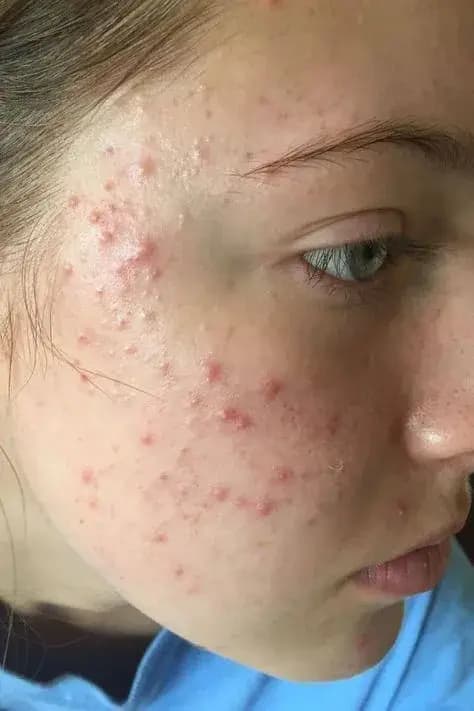 Skin condition
Acne vulgaris is one of the most common skin conditions, and also one of the most misunderstood. It's frequently treated as a hygiene issue or a temporary phase, when it's actually a chronic inflammatory condition involving a specific structure in the skin: the pilosebaceous unit.
What is the pilosebaceous unit?
The pilosebaceous unit is made up of a hair follicle and its attached sebaceous, or oil-producing, gland. These units are concentrated on the face, chest and back, which is why acne appears predominantly in these areas.
What causes acne vulgaris?
Four interrelated processes: excess sebum production (hormonal, particularly androgens), follicular hyperkeratinization (skin cells building up and blocking the follicle), bacterial proliferation (Cutibacterium acnes multiplying in the blocked, oxygen-poor environment), and inflammation (the immune response producing redness and swelling).
What are the severity grades?
Mild is primarily comedonal (blackheads and whiteheads). Moderate adds papules and pustules to comedones. Severe is nodulocystic, deeper and more painful, with a higher scarring risk.
What actually clears it?
Retinoids normalize follicular keratinization at the source. Benzoyl peroxide reduces bacteria. Antibiotics add anti-inflammatory and antibacterial action for a defined period. Hormonal treatment applies when there's a clear hormonal driver. Reactive spot-treating rarely changes the underlying pattern.
How does Acne-Tech™ address this?
Formulated with Tretinoin Gel USP 0.025%, the clinical gold standard, delivered via microsphere technology for controlled, sustained release. It unclogs pores and improves texture while limiting the typical retinoid irritation.
When should you see a dermatologist?
Moderate-to-severe acne, acne not improving after consistent treatment, or any early scarring should be evaluated by a dermatologist.
A note from Monoskin
Acne vulgaris is mechanism-driven, not a hygiene failure. Acne-Tech™ was formulated around that understanding.