
Understand the mechanism behind each condition
Plain-language explainers of the most common skin and hair conditions.
Skin conditions are often lumped together under vague terms, when each one has a distinct cause, mechanism, and approach to care.
This library exists to close that gap. We simplify the science, so you understand not just what a condition looks like, but why it happens.
Why mechanism matters more than symptoms
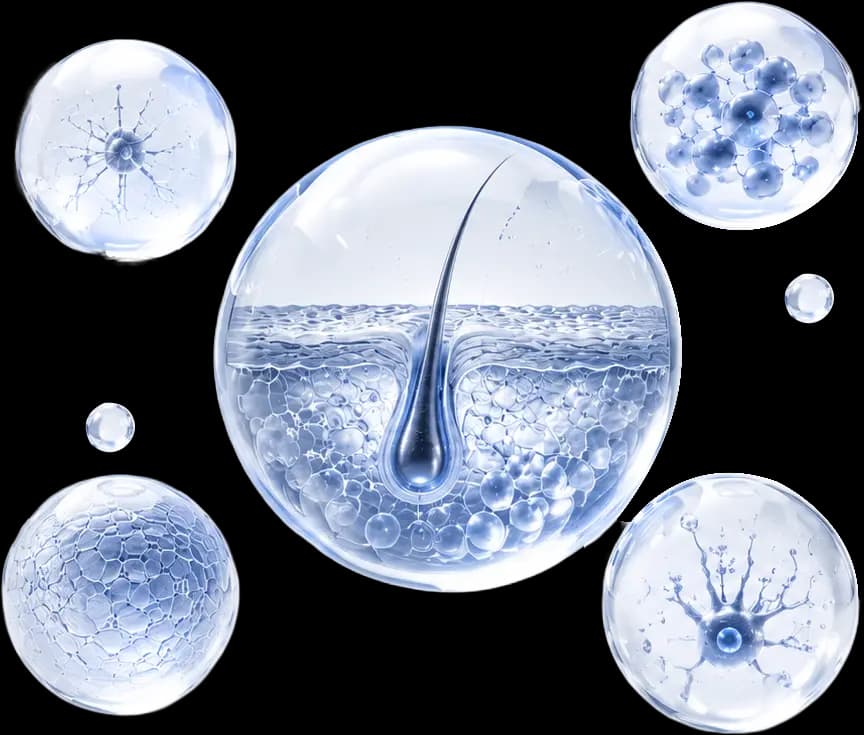
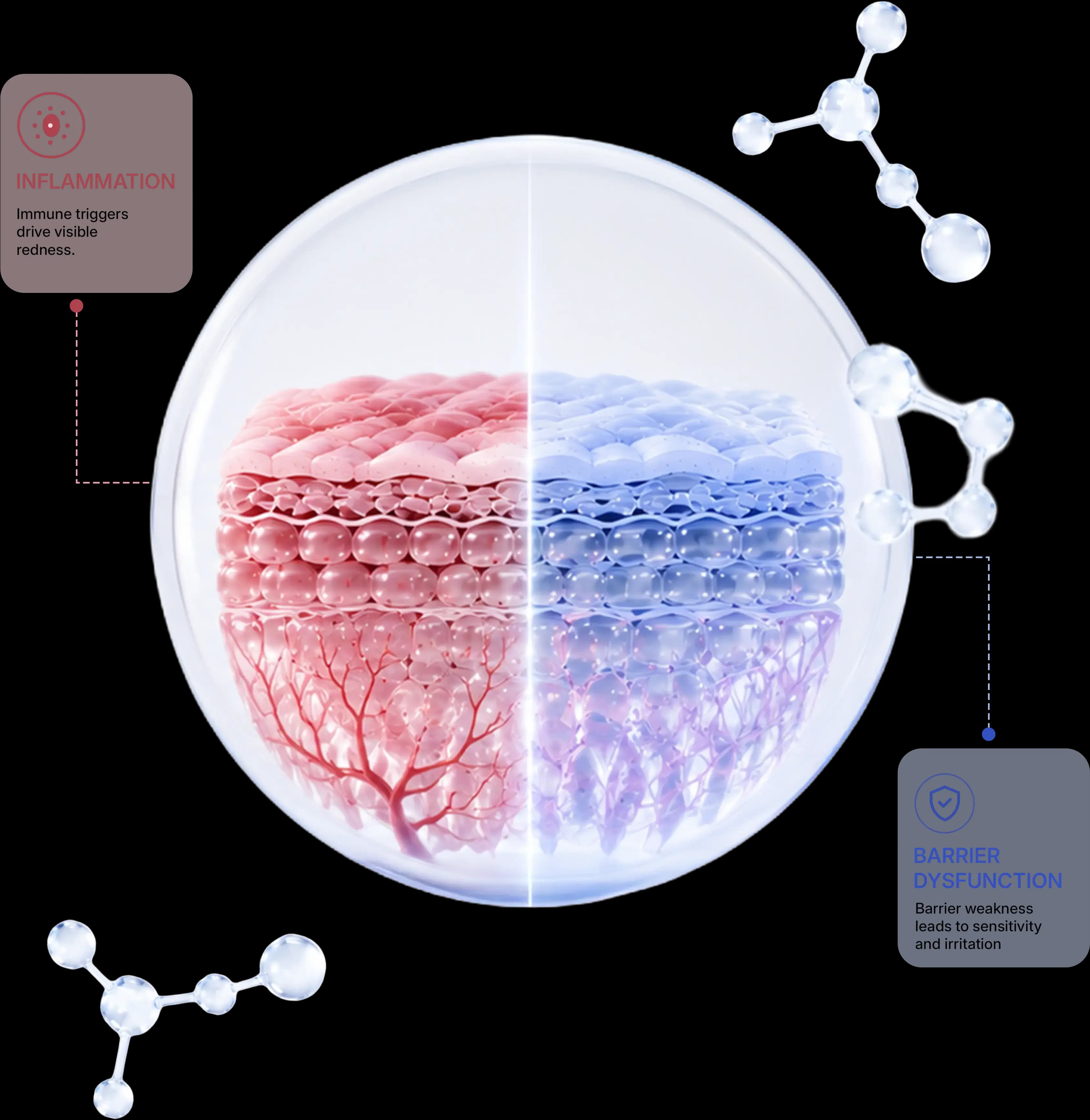
Two conditions can look nearly identical on the skin, redness, flaking, itching, and still have completely different underlying causes. Rosacea and sensitive skin both cause facial redness, but one is a chronic inflammatory condition with genetic and vascular roots, and the other is frequently a sign of a compromised skin barrier. Eczema and psoriasis both cause visible patches and irritation, but one stems primarily from a weakened barrier paired with allergic-type immune activity, and the other from an entirely different autoimmune process that accelerates skin cell turnover. Treating either with the wrong assumption in mind rarely produces lasting improvement.
The same logic applies to hair. Telogen effluvium, postpartum shedding, and androgenetic alopecia can all present as "hair falling out more than usual," yet one is a temporary stress response, one is a hormonal recovery process, and one is a progressive, genetically driven condition. Conflating them leads to either over-treating something that would have resolved on its own, or under-treating something that actually needed early intervention.
Skin condition guides
Hyperpigmentation
Why dark spots form, and why so many treatments only work at the surface.
Melasma
A hormonally-driven pigmentation pattern that often involves more than one layer of skin.
Rosacea
Persistent facial redness, its common triggers, and how it's managed.
Eczema and Atopic Dermatitis
How a weakened barrier and an overactive immune response combine to cause chronic irritation.
Stress and Skin
How stress actually shows up on skin, and why a strong barrier matters more during stressful periods.
Autoimmune Response and Skin
When the immune system reacts against the skin itself, and what that means for care.
Skin Sensitivity
Why skin reacts more than it used to, and what that reaction is actually signaling.
Acne Vulgaris
An inflammatory disorder of the pilosebaceous unit: causes, severity grades, and what actually clears it.
Psoriasis
A chronic autoimmune condition that speeds up skin cell turnover.
Hair condition guides
How to use this library
Each entry follows the same structure: what the condition actually is, what causes it, what it looks like, how it's generally treated, and when it's worth seeing a dermatologist rather than managing it alone. Where a Monoskin formulation is genuinely built around the mechanism involved, it's noted, not as a universal fix, but as a formulation designed with that specific biology in mind.
Understanding a condition properly is the first step to treating it properly. This library is meant to inform that understanding, not replace a dermatologist's diagnosis, especially for anything persistent, severe, or unclear.