Rosacea
Persistent facial redness, its common triggers, and how it's managed.
 Skin condition
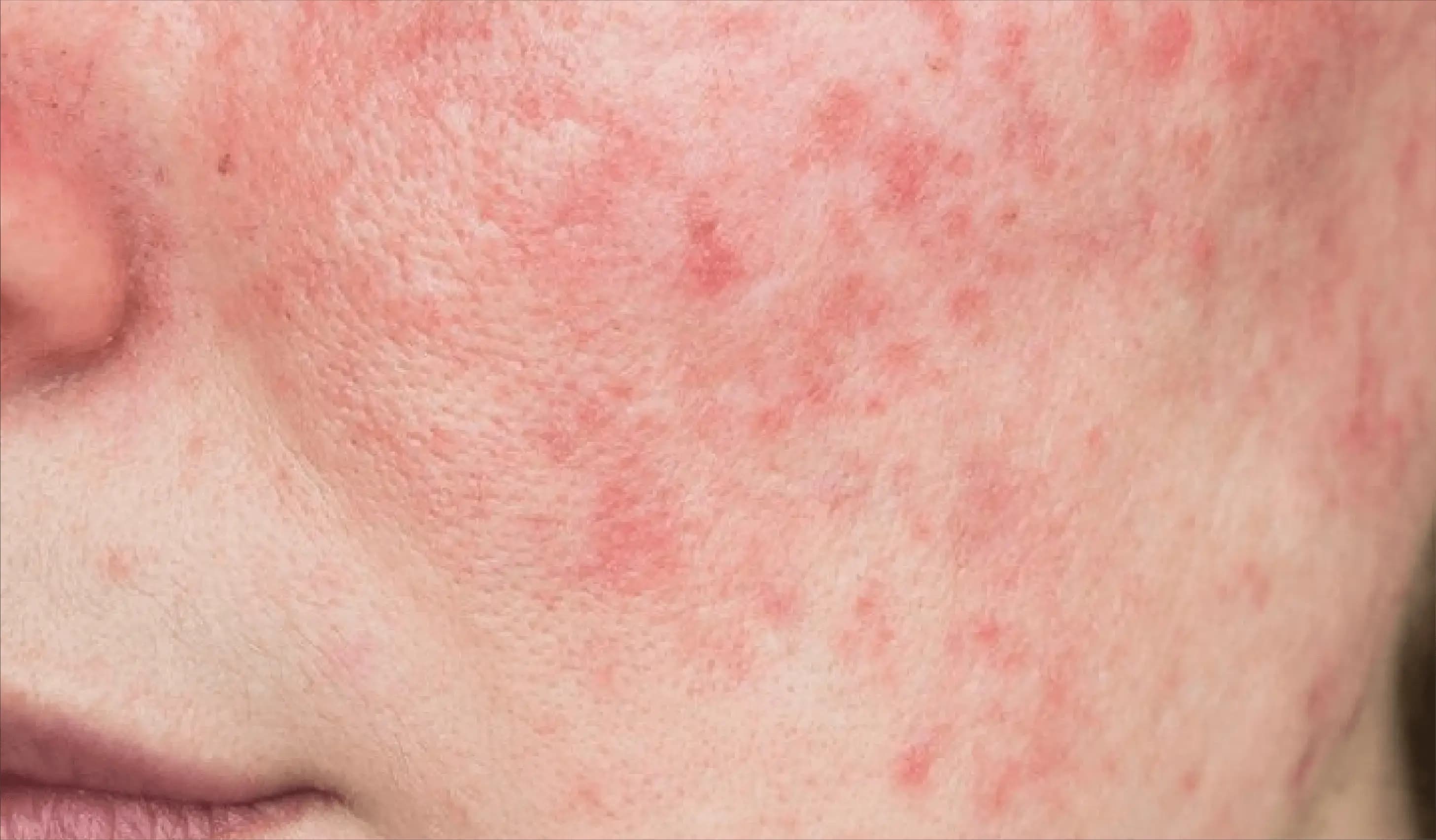
Rosacea is frequently mistaken for sensitive skin, sunburn, or acne, largely because its central symptom, facial redness, overlaps visually with several other conditions. Recognizing what actually distinguishes rosacea helps avoid routines that inadvertently make it worse.
What is rosacea?
Rosacea is a chronic inflammatory skin condition primarily affecting the face, characterized by persistent redness, visible blood vessels, and in some cases small, acne-like bumps. Unlike a temporary flush, rosacea-related redness tends to persist and can worsen gradually over time without appropriate management.
What causes rosacea, and what triggers flare-ups?
The exact cause isn't fully understood, but it's believed to involve a combination of genetic predisposition, immune system activity, and blood vessel reactivity. Common triggers include sun exposure, heat, spicy food, alcohol, stress, and certain skincare ingredients, particularly harsh exfoliants or fragranced products. Triggers vary from person to person, which is part of why identifying individual patterns matters for management.
What are the symptoms and subtypes?
Rosacea can present in several patterns. Some people experience primarily persistent redness and visible blood vessels. Others develop small, red, acne-like bumps, sometimes mistaken for breakouts. In more advanced cases, skin thickening can occur, most commonly around the nose. Eye-related symptoms, including dryness and irritation, can also accompany rosacea in some individuals.
How is rosacea managed?
Management typically combines trigger avoidance with gentle, anti-inflammatory skincare. Harsh actives, physical exfoliation, and high-fragrance products tend to worsen symptoms and are generally avoided. Daily sun protection is essential, since UV exposure is one of the most consistent rosacea triggers. Depending on severity, a dermatologist may also recommend topical or oral treatment to manage inflammation and visible redness.
When should you see a dermatologist?
Persistent facial redness, especially if it's worsening, accompanied by visible bumps or blood vessels, or not improving with gentle skincare and trigger avoidance, should be evaluated by a dermatologist, since accurate diagnosis affects which treatments are appropriate.
A note from Monoskin
Rosacea responds best to a gentle, consistent approach, and to identifying what's actually triggering flare-ups, rather than adding more products in response to redness. Aztra-X™ was formulated with this sensitivity in mind. If redness is persistent or worsening, consult a dermatologist for a diagnosis and management plan.