Melasma
A hormonally-driven pigmentation pattern that often involves more than one layer of skin.
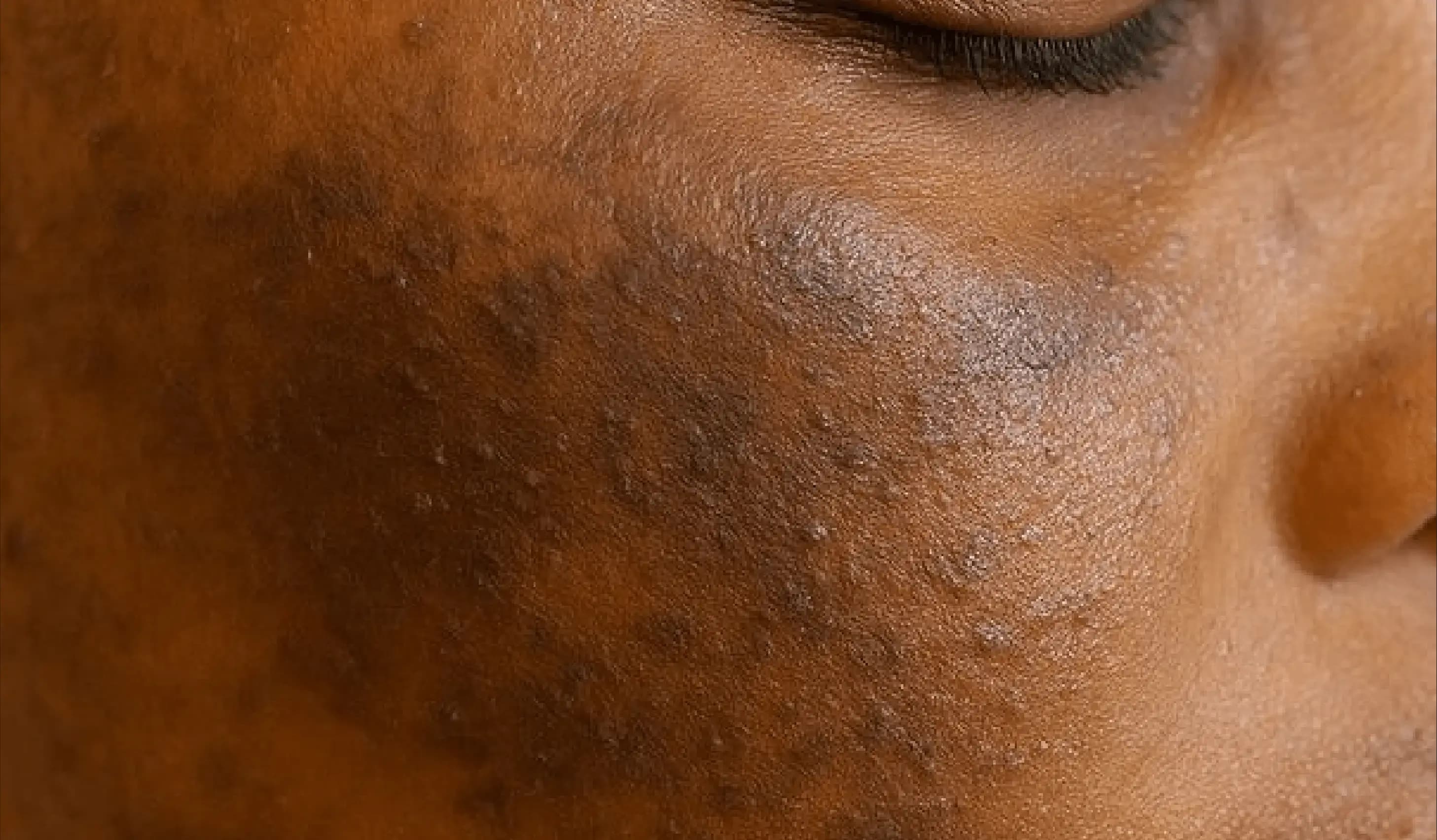 Skin condition
Melasma is frequently grouped together with general hyperpigmentation, but it behaves differently, responds differently to treatment, and often requires a more specific approach. Understanding what makes melasma distinct is often the difference between a treatment plan that works and one that plateaus.
What is melasma?
Melasma is a form of hyperpigmentation that typically appears as symmetrical, brownish patches, most often on the face, including the cheeks, forehead, upper lip and chin. It's significantly more common in women and tends to be closely linked to hormonal activity, distinguishing it from hyperpigmentation caused primarily by sun damage or injury.
What causes melasma?
Melasma is primarily driven by hormonal fluctuations, which is why it's frequently associated with pregnancy, hormonal contraceptives, and hormone therapy. UV exposure is a significant compounding factor, since ultraviolet light stimulates melanocyte activity, often intensifying melasma that's already present. Genetic predisposition also plays a role, and melasma tends to be more common and more persistent in individuals with darker skin tones, including Fitzpatrick IV to VI skin types.
What are the types of melasma?
Melasma is generally categorized by the depth of pigment involved. Epidermal melasma sits closer to the surface and tends to respond better to topical treatment. Dermal melasma sits deeper and is typically more resistant. Many cases are mixed, involving pigment at both levels simultaneously, a key reason melasma is often more stubborn to treat than other forms of hyperpigmentation, and why first-line treatment increasingly targets both depths rather than the surface alone.
How is melasma treated?
Because melasma frequently involves both epidermal and dermal pigment, along with an ongoing hormonal driver, effective treatment usually needs to work at more than one level while also controlling the factors that trigger flare-ups, particularly sun exposure. Daily, consistent sun protection is considered essential throughout treatment, since even brief UV exposure can undo weeks of improvement.
How does Aztra-X™ address melasma specifically?
Aztra-X™ is formulated as a first-line treatment for melasma at both the dermal and epidermal level, directly addressing the layered nature of the condition rather than treating only the visible surface component.
Combining Azelaic Acid 15% with Tranexamic Acid 3%, the formulation blocks melanin production at the enzymatic level through Azelaic Acid's tyrosinase-inhibiting action, while Tranexamic Acid reduces melanocyte activity through inflammatory pathways that often originate in the dermis, the layer implicated in melasma's hormonal component. This combination is what allows the formulation to be positioned specifically for stubborn, recurring dark patches rather than surface discoloration alone.
When should you see a dermatologist?
Melasma that's extensive, resistant to consistent treatment, or emerging during pregnancy should be evaluated by a dermatologist, since treatment options and safety considerations can differ depending on individual circumstances, including pregnancy or hormonal medication use.
A note from Monoskin
Melasma's hormonal driver and layered pigment pattern are why it often resists treatments built for general hyperpigmentation. Aztra-X™ was formulated specifically to work at both depths where melasma pigment sits. Consult a dermatologist for persistent or extensive melasma, particularly during pregnancy or hormonal treatment.