Skin Sensitivity
Why skin reacts more than it used to, and what that reaction is actually signaling.
 Skin condition
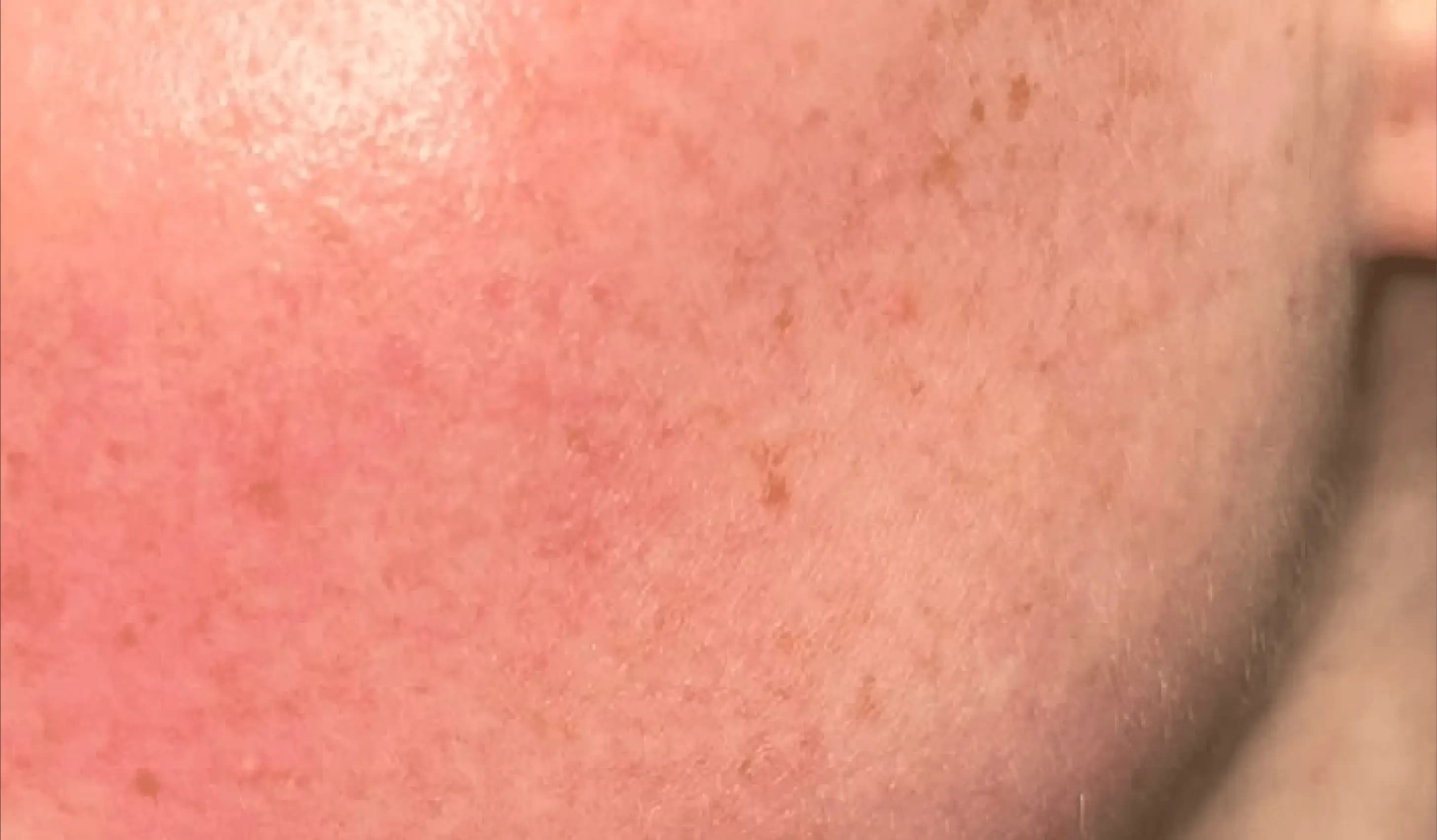
Skin that reacts more readily than it used to, redness, stinging, itching, burning, is often signaling something about the barrier rather than a permanent trait.
What does it mean?
Skin reacting more readily than typical, redness, stinging, itching, burning, to products, environment, or touch. It can be longstanding or develop over time, often via a compromised barrier.
What causes it?
A weakened skin barrier lets irritants and allergens penetrate more easily and makes nerve endings more reactive. It's commonly caused by over-exfoliation, harsh cleansers, excessive strong actives, environmental stress, or underlying conditions.
What are the symptoms?
Stinging or burning after products, visible redness or flushing, tightness, and reacting to previously-tolerated products. Sensitivity often fluctuates with temperature, stress, and active barrier repair.
How is it managed?
Simplify the routine, remove likely irritants (fragrance, alcohol, harsh actives), rebuild the barrier, and introduce new products gradually.
How does 4ZERØ1™ support it?
Its four actions, restoring lipids, calming irritation, replenishing hydration, and protecting during repair, target the barrier compromise behind sensitivity. Formulated with no added fragrance, petroleum, SLS, alcohol, or paraben, it combines Pro Barrier CLR™, Aquaxyl™, InfraGuard™, niacinamide, and panthenol-allantoin, delivered via Cetosomes® for sustained release.
When should you see a dermatologist?
Severe sensitivity persisting despite a simplified routine, or significant redness or swelling (which could signal rosacea or dermatitis), should be evaluated by a dermatologist.
A note from Monoskin
Sensitive skin is usually a signal, not a fixed trait, it often points back to the barrier. 4ZERØ1™ was formulated to restore and protect that barrier. If sensitivity persists despite a simplified routine, consult a dermatologist.