Psoriasis
A chronic autoimmune condition that speeds up skin cell turnover.
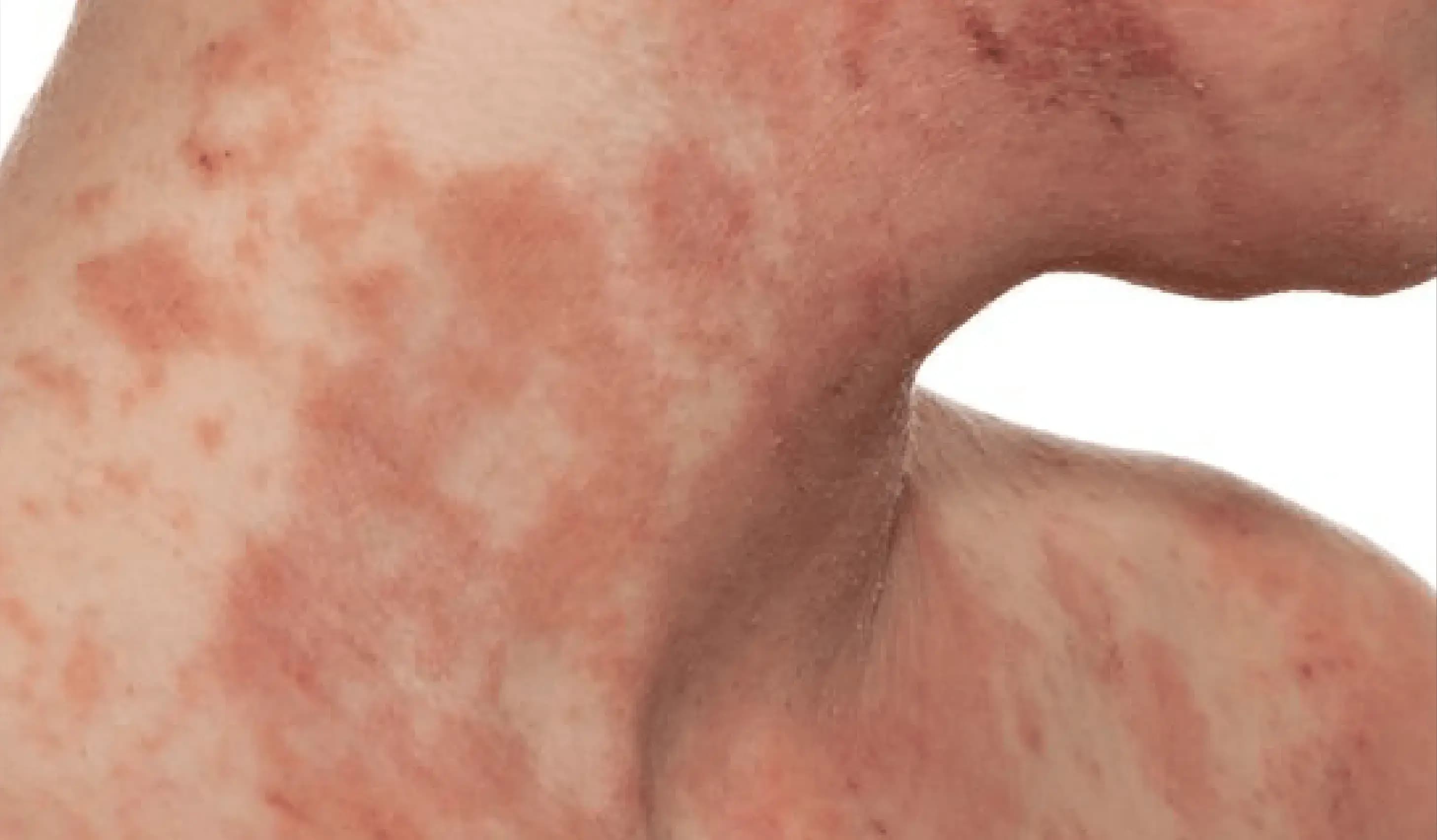 Skin condition
Psoriasis is a chronic, immune-driven condition, not a surface problem, in which skin cells build up far faster than they shed, forming thick, scaly patches.
What is psoriasis?
A chronic autoimmune condition in which the immune system accelerates skin cell production, cells that normally turn over in a month can cycle in days, building up faster than they shed and forming thick, scaly patches.
What causes it?
Overactive T cells attacking healthy skin cells. Genetics play a strong role. Triggers include stress, infections, medications, skin injury, and cold or dry weather.
Symptoms and types
Plaque psoriasis, raised red/silvery patches on the scalp, elbows, knees and lower back, is most common. Guttate psoriasis appears as small drop-shaped spots, often after an infection. Inverse psoriasis affects skin folds and looks smoother and shinier.
How is it treated?
The focus is on calming immune-driven inflammation, not just visible scaling. Non-steroidal topicals are used for mild-to-moderate cases; phototherapy or systemic treatment for more significant cases.
How does wecalm™ help?
A non-steroidal calming lotion with a 2.5–3% triple ceramide complex (Ceramide NP, AP, EOP) for barrier reconstruction, plus niacinamide, allantoin, colloidal oatmeal and dual vitamin E working through a triple anti-inflammatory pathway. Non-steroidal matters for a chronic, recurring condition.
When should you see a dermatologist?
Persistent, widespread, or joint-affecting psoriasis should be evaluated by a dermatologist.
A note from Monoskin
Psoriasis is driven by the immune system, not the surface alone. wecalm™ was formulated to support this without steroids.