Hyperpigmentation
Why dark spots form, and why so many treatments only work at the surface.
 Skin condition
Hyperpigmentation is one of the most common reasons people seek dermatological care, and also one of the most frequently mismanaged, since many routines treat it as a single, uniform problem when it often isn't.
What is hyperpigmentation?
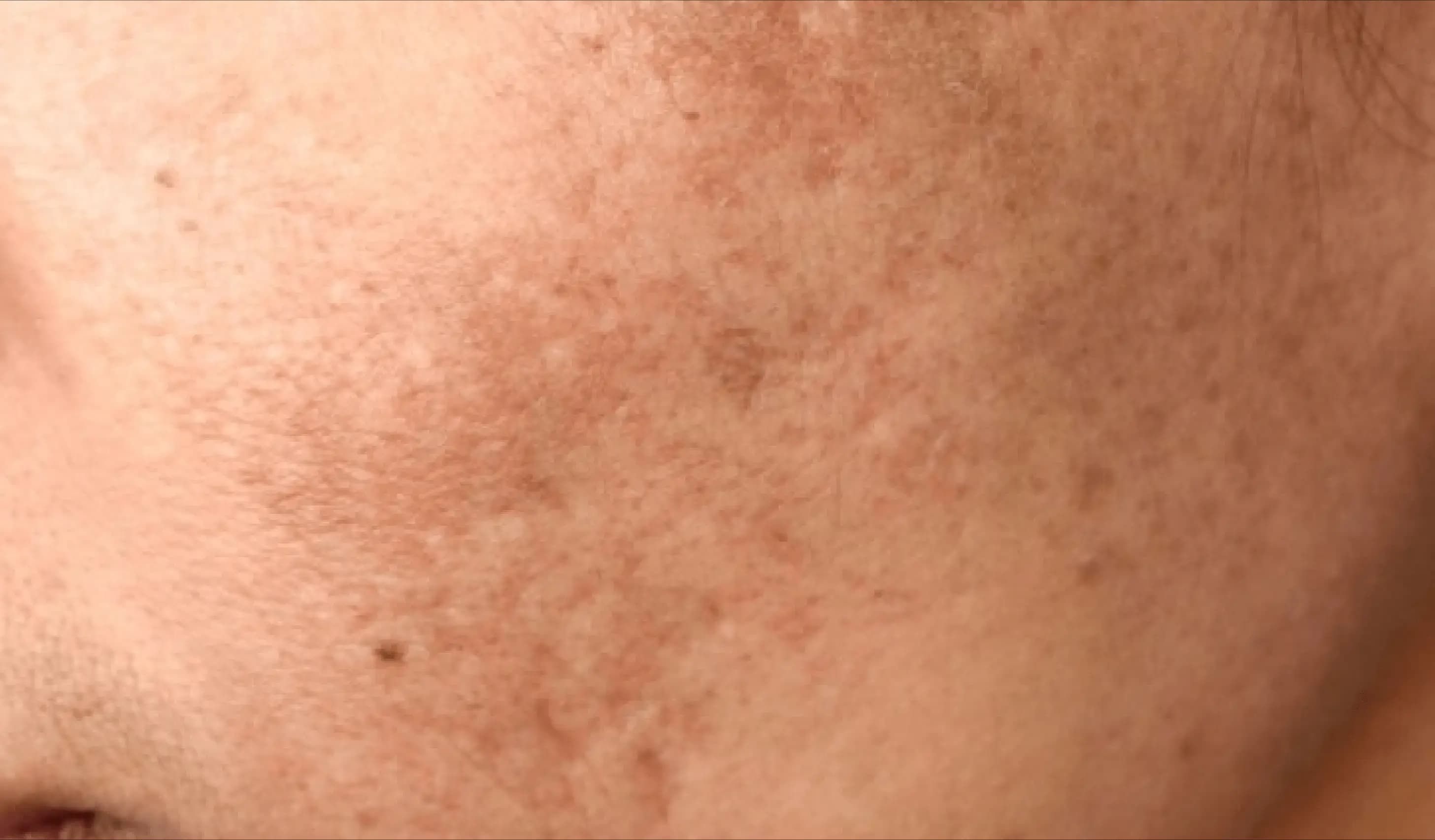
Hyperpigmentation refers to patches of skin that appear darker than the surrounding area, caused by an overproduction of melanin, the pigment responsible for skin color. It can appear as small, localized spots or as broader, more diffuse patches, and its appearance and depth vary depending on the underlying cause.
What causes hyperpigmentation?
Melanin production is regulated by melanocytes, and several factors can trigger these cells to overproduce pigment. UV exposure is one of the most common triggers, stimulating melanin as a protective response. Post-inflammatory hyperpigmentation can follow acne, injury, or irritation. Hormonal activity, particularly during pregnancy or with hormonal contraceptives, can also trigger pigmentation, commonly known as melasma. Genetics and certain medications can contribute as well.
What are the different types?
Hyperpigmentation is generally categorized by where the excess pigment sits. Epidermal pigmentation sits closer to the surface and tends to respond more readily to topical treatment. Dermal pigmentation sits deeper and is typically more resistant to surface-level products. Many cases, particularly melasma, involve a mixed pattern with pigment at both levels, part of why they can be more stubborn to treat.
How is hyperpigmentation treated?
Effective treatment generally depends on identifying which depth is involved. Surface-level pigmentation can often improve with ingredients like vitamin C, niacinamide, or gentle exfoliation. Deeper or mixed pigmentation typically requires ingredients capable of addressing melanin production at more than one level, since treating only the visible surface tends to produce temporary, partial results. Daily sun protection is essential throughout treatment, since continued UV exposure can trigger new pigmentation even while existing spots are fading.
How does Aztra-X™ address hyperpigmentation?
Aztra-X™ is Monoskin's duo-therapy for de-pigmentation, combining Azelaic Acid 15% with Tranexamic Acid 3%, formulated to work at both the dermal and epidermal level rather than the surface alone.
Azelaic Acid functions as a tyrosinase inhibitor, blocking melanin production at the enzymatic level, an epidermal action. Tranexamic Acid works as a plasminogen inhibitor, reducing melanocyte activity through inflammatory pathways that often originate in the dermis. Together, this addresses both where pigment appears and what continues to drive its production.
When should you see a dermatologist?
Hyperpigmentation that's widespread, resistant to a consistent routine, or changing in shape, color or texture should be evaluated by a dermatologist, both to rule out other causes and to determine the most effective, depth-appropriate treatment.
A note from Monoskin
Hyperpigmentation isn't always a single-layer problem, and treatments that only address the surface often produce results that fade. Aztra-X™ was formulated to work at both depths where pigment actually forms. For persistent or widespread pigmentation, consult a dermatologist for a treatment plan suited to your skin.